
Police Promotion Information and Resources
Everything You Need to Know to Plan For and Achieve Promotion Up the Ranks in Law Enforcement!

How Citizen Complaints Directly Affect Your Promotion Chances | Guide to Avoiding Complaints
By Lt. Paul Patti (ret) - Director
Police
Career and Promotion Services, LLC.
 What you need to know
about all aspects of preparing for and achieving your promotion in
law enforcement can be found in these pages.
What you need to know
about all aspects of preparing for and achieving your promotion in
law enforcement can be found in these pages.
About us: I spent 27 years in law enforcement, and since 1985 I have directed an organization that has worked with individuals and agencies in finding and promoting the right people into the higher ranks of police and sheriff's departments. We include a Ph.D. in Personnel Management, as well as a staff attorney focusing on criminal law applications in law enforcement. We specialize not only in writing promotion textbook exams for police agencies, but also written exam preparation for individuals, along with in-basket, oral board and assessment center preparation for both agencies and individual training. Our individual client base has a 99%+ pass rate on their written exams!
More information about me, my organization and affiliates can be found at these links; PoliceCareer.com, About Us, PoliceCareer.net, PolicePromotion.com, Finests.com, In-Basket.net and PoliceAssessmentCenter.com.
Master List of Articles. Questions? Contact me - Paul@PolicePromotion.com
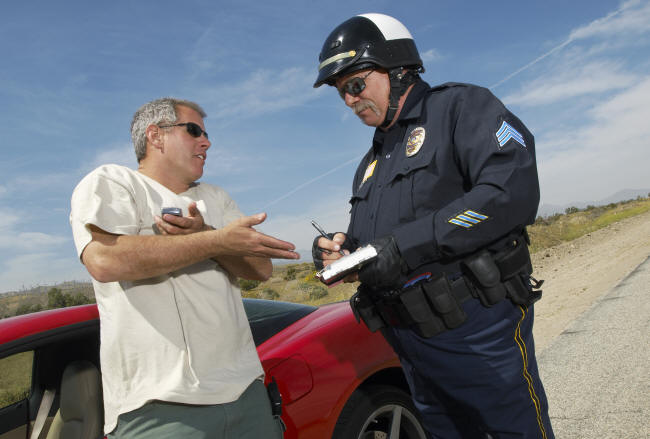
How Citizen Complaints Can Affect Your Promotion Chances —
Understanding the Complaint Process as a Key Element.
By Lt. Paul Patti (ret.), Director,
Police Career and Promotion Services, LLC — 40+ years of law
enforcement promotion expertise.
A citizen complaint is not just a disciplinary event. It is a career event.
Most officers think about complaints only in terms of whether they will be sustained or dismissed. Very few understand that even unfounded or not-sustained complaints create a data trail that follows them through Early Warning Systems, personnel files, promotion panels, and lateral transfer background investigations for the entirety of their career.
It wasn't always this way. From the 1970's though early 2000's the police department and supervisory mindset often was summed up in this often-used quote, "If you're not generating complaints, then you're not doing your job."
Also, years ago the impact of any non-sustained complaint was negligible. Officers and departments believed "not-sustained" was the same as "not guilty" and did not believe that a not-sustained complaint would be used in promotion decisions. In today's early officer complaint warning systems, however, a not-sustained complaint still carries a lot of weight in the data. It can be used in making employment and promotion decisions.
In simplest terms, remember this now simple truth — if the charges against an officer are sustained, documentation of the charge and the discipline are permanently placed in the officer's or employee's personnel file. But unfounded and not-sustained complaints are also retained — the question is for how long, and under what circumstances they can be accessed. The answer to that question varies by state and local law, and by department policy. It's up to you to find out about time elements and limits for the documentation kept in your personnel jacket, especially as related to the outcome of citizen complaints.
The Early Warning System — the File That Never Sleeps
An Early Intervention System (EIS) or Early Warning System (EWS) is a data-driven tracking and alert system focused on misconduct and citizen complaints. When properly implemented and used, it detects trends and spikes in an officer's professional conduct and behavior over a specified time period and helps predict the risk of future adverse conduct. The system then alerts agency supervisors, who can identify issues with an officer and address the root causes.The prevalence of these systems is now substantial: in 2016, 69.3% of police departments in the US with 100 or more officers had an EIS, and 80.5% of agencies with 500 or more officers had such a system in place. CALEA accreditation requires the implementation of an EIS. If your agency is CALEA accredited or has over 100 officers, your complaint history is being tracked and flagged automatically
The scope of what these systems track is far broader than most officers realize. In their simplest form, early intervention systems track certain events, like uses of force, discharges of a firearm, lawsuits against an officer, or complaints. Agencies vary in the types of events they track, and a recent primer by the Police Foundation identified seventeen different types of events that may be part of a system, including an officer's failure to appear in court, excessive use of sick leave, and the frequency of warrantless searches and seizures. If an officer has more than a specified number of incidents over a defined period of time — for example, more than two complaints over a two-year period — the officer is flagged for review.
Some officers view being identified by an early warning system as a likely impediment to promotion. That is correct — and it is not a perception. It is a documented reality.
Quick Refresher on Citizen Complaint Dispositions
These definitions have become fairly standardized around the nation, but some agencies have made changes to the wording, and even added sub-categories. Again, find out what your agency's citizen complaint policy includes in its definitions:Sustained — the complaint was supported by sufficient evidence to justify disciplinary action.
Not Sustained — the evidence was insufficient to either prove or disprove the complaint.
Unfounded — the facts revealed by the investigation did not support the complaint.
Exonerated — the complained-of conduct occurred, but the accused officer's actions were proper under the circumstance.
No Affidavit, Lack of Cooperation, or Complaint Withdrawn — the complainant did not sign an affidavit, were uncooperative, refused to give a statement or formally withdrew the complaint in writing.
The national statistics on complaint outcomes are important context:
According to the Bureau of Justice Statistics, in 2006, of the use-of-force complaints receiving a final disposition,
34% were not sustained
25% were unfounded
23% resulted in officers being exonerated
8% were sustained.
The vast majority of complaints are not sustained — but they exist in the record regardless.
How Complaints Directly Affect Your Promotion Chances
In Texas — The Promotional Points Deduction: A Texas House Bill from 2001 provides a concrete legislative example of the direct connection between sustained complaints and promotion: HB 3492 requires promotional points to be deducted from a police officer's grade for each complaint sustained against the officer by the department for certain offenses, including use of excessive force, spousal abuse, and tampering with evidence. This is a direct, quantifiable connection between a sustained complaint and a lower score on the promotion list.The Bypass Principle — From the AELE Law Enforcement Legal Digest, which covers promotional rights case law: arbitrators have upheld chiefs' decisions to bypass officers who are next in line for promotion based on complaint history and disciplinary records. The chief's discretion to look beyond the exam score — particularly above sergeant level — is well established in case law.
The Oral Board Connection — Even when complaints are not part of formal scoring, they surface in oral board settings. From Finests.com: common role play situations are citizen complaints, community meetings, and roll call briefings. In many cases role players are instructed to be initially uncooperative, but to increase compliance if you are handling the exercise appropriately. An officer who has a history of generating complaints is demonstrably less equipped to handle the citizen complaint role-play scenario convincingly — because the panel knows the file.
The Education Connection
One often-overlooked strategy for reducing complaint risk — and thus protecting the promotional record — is higher education. Increased communication ability and increased analysis and problem solving skills are what a higher education can give someone, regardless of what the major course of study is. Those are the exact skills that keep complaint rates low and promotion scores high.There is increasing emphasis on the value of higher education in enhancing officer effectiveness, reducing citizen complaints, and facilitating career progression.
Ben Stickle from Middle Tennessee State University found that degreed officers resolved conflicts at a higher level than their counterparts without higher education credentials.
Also, a compelling body of research underscores the correlation between higher education among law enforcement officers and a reduction in citizen complaints.
Complaints and Lateral Transfers — the Background Investigation
California's SB 16 provides the clearest legislative example of how complaint transparency has expanded: existing law requires all law enforcement agencies to establish a procedure to investigate complaints by members of the public against their employees, and requires agencies to keep records of such complaints and any related reports or findings for at least five years.SB 16 amends the law to expand this retention requirement. Peace officers who apply for employment with another agency are required to give written permission for the hiring agency to view their personnel file, and the hiring department must request and review that file before hiring.
Don't Join Group 3 — the "Top 4%" of Officers In Your Agency!
Coming in at the "Top 4%" in your agency may seem like an honor, and it may be, if you're discussing "Top 4%" in felony arrests, traffic citations, or felony conviction rates.But not in this category. Land in the top 4% here and you will nearly wipe out your future chances for a promotion.
What follows is a key ingredient to ensure your promotion chances are not stymied by citizen complaints:
Dr. Christopher Harris, a professor of criminal justice at the University of Massachusetts-Lowell, had the unique opportunity to examine almost two decades of data from the personnel files of a medium-sized city police department in New York. Crunching the data on citizen complaints, he identified three distinct career paths among officers:
Group 1 — approximately 61% of officers — start their careers experiencing very few problems, and their risk of accumulating further citizen complaints declines steadily as they become more seasoned. These are the officers who come to the career with strong interpersonal skills and adapt quickly.
Group 2 — approximately 35% of officers — experience a rough start, accumulating several citizen complaints or rule violations in the first six years, sometimes averaging as many as two complaints a year as they find their footing and learn the craft.
Group 3 — approximately 4% — is the chronic problem officer group that accumulates complaints throughout their career with no decline. Future promotion chances drop to near-zero. This group disproportionately drives the complaint data at any agency.
Group 1 usually leads in getting the promotions, but Group 2 is where the most important promotion advice lies. Group 2 officers can and do recover — but only if they understand what is happening and make deliberate changes in their first six years. The complaint pattern of those first six years is the most scrutinized period of a career when promotion panels and background investigators review a file.
What Officers Can Do — Practical Career Advice
Research clearly shows the importance of interpersonal communication in police work. When police agencies hire mature, educated officers with strong communication skills and then provide further instruction and experience in communication techniques, citizen complaints against those officers remain low.The OJP St. Petersburg study also found that officers with higher complaint rates also had higher activity levels — which only partially explains the correlation. However the research also confirms that officers with strong interpersonal skills maintain higher activity levels with lower complaint rates. Activity without communication skill is the danger zone.
One of the most common needs of a citizen who is lodging a complaint is that he or she needs to understand what is happening at the moment of police action.
Officers understand what they can and can't do by way of standard operating procedures, laws, and other restrictions on their authority. Usually all the citizen knows is what he or she has seen on television. Guiding citizens to useful resources — rather than leaving them frustrated — leaves them with the impression you tried to help them, and thus lessen the chance of a complaint.
Remember that even if the complaint is not-sustained, it could still come back to harm your promotion chances. BE PROACTIVE at the time of the occurrence to anticipate and deal with the complaint ahead of time. If your supervisor is on scene, have a quick discussion on how to proceed to lessen the possibility of a complaint, especially if your actions were fully justified.
Handle Citizen Complaints Proactively!
The IACP guide on proactive complaint handling identifies a specific model worth citing. Physicians who developed a rapport with their patients were less likely to be sued than those who did not. What does that mean to police officials? It suggests that when law enforcement supervisors receiving complaints effectively communicate that they are sincerely concerned about a citizen's problem, the interaction is likely to reduce potential complaints and litigation.In my time as a sergeant, lieutenant and even when I was assigned to Internal Affairs, most complaints I received were for one of two reasons:
1. The person just wanted to complain and be heard, or
2. There was some type of communication breakdown.
Sometimes the miscommunication falls on the complainant. But sometimes it's caused by head-strong officers. Either the complainant didn't listen to the officer's explanation, or the officer did a bad job explaining the situation.
In my experience, most of the time the officer did a great job in difficult circumstances, and emotions and tempers ran high, and regrettable things were said or done. But even when the officer was wrong, this can still result in a positive outcome — because these situations give opportunities for growth and improvement.
In preventable complaint cases, the training division should be consulted, and a lesson plan drawn up including BWC footage and other material to outline and study the incident, pinpointing how things could have been handled differently to avoid the complaint altogether.
In conclusion, we all know that an officer is unlikely to stay complaint-free for the first 6 years of a police career. But very early on, long before you have made a negative impression as one of the "Top 4%" and are a citizen complaint magnet, study what is going wrong in your attitude, verbiage and approach to situations. When you see a complaint situation forming, be proactive at the scene in communicating with everyone involved why you and/or other officers were justified in taking that action.
Articles to further understand the Impact of Citizen Complaints on Your Promotion Chances;
 Citizen Complaints: What the Police Should Know
Dr. Christopher Harris and the Three Career Paths Research
Promotional Points Deduction for Sustained Complaints
Early Warning Systems: Responding to the Problem Police Officer
National Study of Early Warning Systems
Police1 — Today's Early Intervention Systems
Lexipol — Handling Citizen Complaints in Law Enforcement
IACP — Handling Citizen Complaints through Proactive Methodology
Police1 — How to Stay Professional
AELE Law Enforcement Legal Digest — Promotional Rights and
Procedures
American Police Beat — Higher Education and Complaint Reduction
Police Magazine's Advice on Dealing With Complaints
Professionally
Citizen Complaints: What the Police Should Know
Dr. Christopher Harris and the Three Career Paths Research
Promotional Points Deduction for Sustained Complaints
Early Warning Systems: Responding to the Problem Police Officer
National Study of Early Warning Systems
Police1 — Today's Early Intervention Systems
Lexipol — Handling Citizen Complaints in Law Enforcement
IACP — Handling Citizen Complaints through Proactive Methodology
Police1 — How to Stay Professional
AELE Law Enforcement Legal Digest — Promotional Rights and
Procedures
American Police Beat — Higher Education and Complaint Reduction
Police Magazine's Advice on Dealing With Complaints
ProfessionallyMaster list of articles and resources: from PolicePromotion.net
Your Police Promotion Timeline — When Should
Preparation Begin?
Field Training — Your First Defining Chapter
Building Your Promotional Reputation Over Time
How Citizen Complaints Can Affect Your Promotion Chances
Recordkeeping —
Your Evaluations, and Training Documentation
Great Police Leaders Focus on the Details — Here's How!
The Two Tracks —
Supervision vs. Specialization
The Role of College Education
in Law Enforcement
The FTO As an Early Promotion Credential
The Written Promotional
Exam — What It Covers and How to Prepare
The Oral Board — the
Promotion First-Timer's Biggest Challenge
The In-Basket Exercise
— NOT as
Easy as You Think!
Assessment Center Exercises
—
Don't Fear — Prepare!
Making it To The Top — Or — How High is
High Enough?
When it's Time to Leave it All Behind — And What to
do Next.Do You REALLY Want the Promotion? — Links to help you prepare for:
Police Corporal
Police Detective
Police Sergeant
Police Lieutenant
Police Captain
Police
Administration and Upper Management
Understanding Police Leadership Concepts
Understanding Police Ethical Considerations
Understanding Police
Patrol and Field Operations
Understanding Community
and Problem-Oriented Policing
Understanding Intelligence-Led Policing
Police Case Law
Application with Case Law Pro