
Police Promotion Information and Resources.
Everything You
Need to Know to Plan For and Achieve Promotion Up the Ranks in Law
Enforcement!

Is Field Training Officer
Considered a True Stepping-Stone to Promotion?
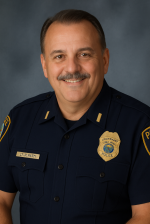
By Lt. Paul Patti (ret) - Director
Police
Career and Promotion Services, LLC.
 What you need to know
about all aspects of preparing for and achieving your promotion in
law enforcement can be found in these pages.
What you need to know
about all aspects of preparing for and achieving your promotion in
law enforcement can be found in these pages.
About us: I spent 27 years in law enforcement, and since 1985 I have directed an organization that has worked with individuals and agencies in finding and promoting the right people into the higher ranks of police and sheriff's departments. We include a Ph.D. in Personnel Management, as well as a staff attorney focusing on criminal law applications and legal-oriented promotion exams in law enforcement. We specialize not only in writing promotion textbook exams for police agencies, but also written exam preparation for individuals, along with in-basket, oral board and assessment center preparation for both agencies and individual training. Our individual client base of thousands of career law officers has a 99%+ pass rate on their written exams!
More information about me, my organization and affiliates can be found at these links; PoliceCareer.com, About Us, PoliceCareer.net, PolicePromotion.com, Finests.com, In-Basket.net and PoliceAssessmentCenter.com.
Master List of Articles. Questions? Contact me - Paul@PolicePromotion.com

The FTO Assignment — Your First Real Step Toward Promotion
By Lt. Paul Patti (ret.), Director,
Police Career and Promotion Services, LLC — 40+ years of law
enforcement promotion expertise.
I have found that assignment to
Field Training Officer (FTO) is the first formal leadership
opportunity most officers ever receive — but unfortunately very
few think of it that way. It can be offered so early in a
career, in as little as 24 - 26 months to officers and deputies
with leadership potential, that it comes at a time when corporal
or sergeant stripes - or a detective shield - still seems so far
off.
Worse, some think of only the extra work involved -
the extra forms - the extra hours - and even the potential
liability issues as you take on the responsibility of mentoring
new officers.
Typical
responses when some 2 - to - 5 year officers are presented with
the FTO opportunity; "too much more paperwork" - "too
intensive, you're stuck with them for 16 weeks" - "No or not
enough extra pay for the added responsibility" - "I like working
alone most of the time." They might as well be declaring "I'm
not cut out for leadership."
Turn down an offer or
opportunity to become an FTO - it may haunt you later at that
first promotion oral board. Why risk it?
During my own
career I was instrumental in starting the first formal FTO
program in my agency. This was way back in the mid-1980s, when
"put him with the senior guy" was more or less the FTO program
of the day. I remember the discussions at the time, and the
research we received from the west-coast agencies that had the
first formalized programs;
FTOs are
expected to know and abide by all the current policies and
procedures. They must lead by example, demonstrating a stellar
arrest and citation history with high numbers and thorough
investigations. Their interviews, record keeping, report
writing, court testimony and citizen interactions must
demonstrate not just competence, but superiority.
A patrol officer who serves as an FTO already has a lot of
leadership experience, and will gain even more. That officer can
then discuss specific FTO leadership examples during the
promotional interview. For instance, an FTO could talk about a
time when he or she applied leadership skills and critical
thinking to help a trainee through a complicated case. If you do
a year or two or three as an FTO and keep good records, you
should be able to cite DOZENS of important leadership
interventions into the work of the new rookies ("boots") you
have trained.
From the
Lexipol
article: if the agency has formal
testing to become an FTO, instead of just an assignment, the FTO
test is sometimes offered after just 24 months — making it the
first real promotional stepping stone.
A quick promotion
in law enforcement like this is an honor, since those selected
are charged with leading newer officers through in-the-field
training. FTO is about leadership - and leadership is about
communication, mitigating risks, educating, training, and all
the other skills and abilities you will need for each of the
higher ranks in your agency.
Finally - I need to mention
- friendships. Think of all
those you have and will mentor in the field as friends and
agency support. If you rise to the top, think of just how many
officers and supervisors you will have mentored that will now be
loyal members of your leadership and law enforcement team.
See also the article on
Field Training — Your First Defining Chapter
Two short articles to
further understand this topic;
 American Public University - Preparing to Rise Through the
Ranks in Law Enforcement
American Public University - Preparing to Rise Through the
Ranks in Law Enforcement
Lexipol -
Are You Ready for Promotion?
Master
list of articles and resources: from
PolicePromotion.net
Your Police Promotion Timeline — When Should
Preparation Begin?
Field Training — Your First Defining Chapter
Building Your Promotional Reputation Over Time
How Citizen Complaints Can Affect Your Promotion Chances
Recordkeeping —
Your Evaluations, and Training Documentation
Great Police Leaders Focus on the Details — Here's How!
The Two Tracks —
Supervision vs. Specialization
The Role of College Education
in Law Enforcement
The FTO As an Early Promotion Credential
The Written Promotional
Exam — What It Covers and How to Prepare
The Oral Board — the
Promotion First-Timer's Biggest Challenge
The In-Basket Exercise
— NOT as
Easy as You Think!
Assessment Center Exercises
—
Don't Fear — Prepare!
Making it To The Top — Or — How High is
High Enough?
When it's Time to Leave it All Behind — And What to
do Next.
Do You REALLY
Want the Promotion?
— Links to help you prepare for:
Police Corporal
Police Detective
Police Sergeant
Police Lieutenant
Police Captain
Police
Administration and Upper Management
Understanding Police Leadership Concepts
Understanding Police Ethical Considerations
Understanding Police
Patrol and Field Operations
Understanding Community
and Problem-Oriented Policing
Understanding Intelligence-Led Policing
Police Case Law
Application with Case Law Pro