
Police Promotion Information and Resources.
Everything You Need to Know to Plan For and Achieve Promotion Up the Ranks in Law Enforcement!

Field Training — Your FIRST
Defining Chapter in Your Career
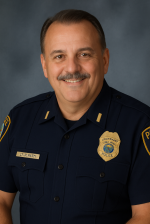
By Lt. Paul Patti (ret) - Director
Police
Career and Promotion Services, LLC.
 What you need to know
about all aspects of preparing for and achieving your promotion in
law enforcement can be found in these pages.
What you need to know
about all aspects of preparing for and achieving your promotion in
law enforcement can be found in these pages.
About us: I spent 27 years in law enforcement, and since 1985 I have directed an organization that has worked with individuals and agencies in finding and promoting the right people into the higher ranks of police and sheriff's departments. We include a Ph.D. in Personnel Management, as well as a staff attorney focusing on criminal law applications and legal-oriented promotion exams in law enforcement. We specialize not only in writing promotion textbook exams for police agencies, but also written exam preparation for individuals, along with in-basket, oral board and assessment center preparation for both agencies and individual training. Our individual client base of thousands of career law officers has a 99%+ pass rate on their written exams!
More information about me, my organization and affiliates can be found at these links; PoliceCareer.com, About Us, PoliceCareer.net, PolicePromotion.com, Finests.com, In-Basket.net and PoliceAssessmentCenter.com.
Master List of Articles. Questions? Contact me - Paul@PolicePromotion.com
Field Training - Your First Defining Chapter in Your Career
By Lt. Paul Patti (ret.), Director,
Police Career and Promotion Services, LLC — 40+ years of law
enforcement promotion expertise.
The field training period is where the promotion story truly begins, and research now confirms this more powerfully than ever.
Field training is a crucial training process where policing in theory meets the realities of on-the-job training and daily challenges. It's where knowledge and skills are tested under real-world conditions and where the seeds of either effective practices or problematic behaviors can be planted.
Field training officers (FTOs) are more than trainers — they are mentors, culture-bearers, role models, and translators of agency values. As a new rookie officer, the FTO is your first TRUE supervisor, a one-on-one critical judge of your character, skills and abilities.
Groundbreaking new research from 2026 confirms how lasting these early impressions are: Recruits who trained under FTOs who more often used force while on patrol also went on to be similarly forceful in their interactions on the job. This effect is primarily shaped by the first FTO and persists over time, suggesting FTO programs significantly influence long-term officer behavior.
One researcher found that 30-year veterans of the department could still remember one-liners their FTO would toss out while on patrol.
The lesson for the new officer is this: pay attention to
everything during field training, not just survival skills. The
habits — good and bad — formed in those first weeks tend to
stay.
Key advice for rookies in field training —
words that
will plant the seeds
of promotion:
It's important to be the type of employee who wants to learn and challenge themselves to constantly be learning in our ever-changing law enforcement careers. Here's a specific instance where you will shine; if you take on a case where the investigation requires a search warrant, tell your FTO you want to pair up with a detective and help write the search warrant.
Don't wait for somebody to ask you; take the initiative. Don't wait to be told. If you see a mistake about to be made - say something! Leadership, even at this early stage in your career, needs to start appearing. There is no greater leadership trait for a police officer than the ability to intervene at a crucial moment.
I spent 27 years in law enforcement, in a variety of assignments
as an officer, sergeant and lieutenant. I wasn't always "at my
best" — working 12-hour round-the-clock shifts, no one can claim they always are. A few times in my
career I was happy to be stopped cold in my tracks, either while
just thinking out loud, planning an arrest, or about to do or
say something I hadn't completely thought through. I was lucky
enough to always have a friend nearby — a mentor, a subordinate,
or a boss, and even a rookie — who thankfully stepped up and
said something along the lines of "Hold on, let's think
this through a little more."
The Broader FTO Message:
The first few months for a police trainee ARE crucial. It's during this time that the trainee learns the agency's goals, missions and processes and a positive mindset is forged.
The FTO role itself is also worth mentioning as an early promotional stepping stone: Training roles are often stepping stones to supervisory advancement — they build leadership and instructional skills that translate directly into promotional examinations and interviews.
And from the Lexipol article: FTOs are expected to know and abide by all the current policies and procedures. They must lead by example, demonstrating a stellar arrest and citation history with high numbers and thorough investigations. Their interviews, record keeping, report writing, court testimony and citizen interactions must demonstrate not just competence, but superiority. And leadership is a key factor in the selection.
Field training is not just a probationary hurdle to survive. It is the opening chapter of your promotion story. Write it well.
Some short articles to further understand this topic;
 The Crucial Role of Police Field Training in Shaping Law
Enforcement
First Field Training Officer and Use-of-Force Habits
How To Survive Field Training and Keep Your FTO Happy
A field training officer’s starter pack for teaching, feedback
and mentorship
Promotion in Law Enforcement - Am I Ready?
The Crucial Role of Police Field Training in Shaping Law
Enforcement
First Field Training Officer and Use-of-Force Habits
How To Survive Field Training and Keep Your FTO Happy
A field training officer’s starter pack for teaching, feedback
and mentorship
Promotion in Law Enforcement - Am I Ready?Master list of articles and resources: from PolicePromotion.net
Your Police Promotion Timeline — When Should
Preparation Begin?
Field Training — Your First Defining Chapter
Building Your Promotional Reputation Over Time
How Citizen Complaints Can Affect Your Promotion Chances
Recordkeeping —
Your Evaluations, and Training Documentation
Great Police Leaders Focus on the Details — Here's How!
The Two Tracks —
Supervision vs. Specialization
The Role of College Education
in Law Enforcement
The FTO As an Early Promotion Credential
The Written Promotional
Exam — What It Covers and How to Prepare
The Oral Board — the
Promotion First-Timer's Biggest Challenge
The In-Basket Exercise
— NOT as
Easy as You Think!
Assessment Center Exercises
—
Don't Fear — Prepare!
Making it To The Top — Or — How High is
High Enough?
When it's Time to Leave it All Behind — And What to
do Next.Do You REALLY Want the Promotion? — Links to help you prepare for:
Police Corporal
Police Detective
Police Sergeant
Police Lieutenant
Police Captain
Police
Administration and Upper Management
Understanding Police Leadership Concepts
Understanding Police Ethical Considerations
Understanding Police
Patrol and Field Operations
Understanding Community
and Problem-Oriented Policing
Understanding Intelligence-Led Policing
Police Case Law
Application with Case Law Pro