
Police Promotion Information and Resources.
Everything You Need to Know to Plan For and Achieve Promotion Up the Ranks in Law Enforcement!

Police
Promotion Oral Board Preparation
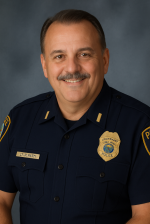
By Lt. Paul Patti (ret) - Director
Police
Career and Promotion Services, LLC.
 What you need to know
about all aspects of preparing for and achieving your promotion in
law enforcement can be found in these pages.
What you need to know
about all aspects of preparing for and achieving your promotion in
law enforcement can be found in these pages.
About us: I spent 27 years in law enforcement, and since 1985 I have directed an organization that has worked with individuals and agencies in finding and promoting the right people into the higher ranks of police and sheriff's departments. We include a Ph.D. in Personnel Management, as well as a staff attorney focusing on criminal law applications and legal-oriented promotion exams in law enforcement. We specialize not only in writing promotion textbook exams for police agencies, but also written exam preparation for individuals, along with in-basket, oral board and assessment center preparation for both agencies and individual training. Our individual client base of thousands of career law officers has a 99%+ pass rate on their written exams!
More information about me, my organization and affiliates can be found at these links; PoliceCareer.com, PoliceCareer.net, PolicePromotion.com, Finests.com, In-Basket.net and PoliceAssessmentCenter.com.
Master List of Articles. Questions? Contact me - Paul@PolicePromotion.com

Your Police Promotion
Oral Board Preparation
By Lt. Paul
Patti (ret.), Director, Police Career and Promotion Services, LLC —
40+ years of law enforcement promotion expertise.
The Police Promotion Oral Board is the component first-time candidates most underestimate and least prepare for.
What the panel is looking for: Panel members are looking for specifics about your law enforcement leadership skills and your character. They want a well-prepared leader and professional with diverse experience.
Panel members will want candidates to assume the role they are testing for and clearly see that they are capable of good decisions, are disciplined, hardworking, loyal, and able to teach.
Your interview question responses should be organized, detailed, conversational, and well spoken. It's not just what you say (content), it's how you say it (presentation).
The most important concept for the first-time candidate: Those who are designing sergeant oral boards are well aware that the jump from front-line officer to first-line supervisor is the most challenging transition. While your past and current experiences are relevant to your readiness to promote — oral boards are primarily about you demonstrating your readiness to serve at the rank you are pursuing.
On command presence and confidence: Before you walk into the oral board, remind yourself that you have earned the right to be promoted at the top of the list. Then walk in with the confidence and command presence of a fully qualified sergeant. Your behavior will set a positive expectation with the panel before you even say one word.
On building the opening statement: Great opening statements should indicate that you are ready for the position for which you are applying. For example, if you are interviewing to become a sergeant, you should discuss how you have led training and warrant operations, organized community events, and addressed acceptable or unacceptable behavior by your peers. You don't want to highlight all the arrests you have made because they are not looking to promote you to continue doing your same assignment.
On the question of values — which first-timers rarely think about in advance: The most important thing about leading is defining your values. Your values are your compass. They help you navigate hard times and tip the scale during difficult decisions. If you are pausing to come up with a fluffy interview answer, then you have work to do.
On what to say and how to practice: Anticipate the types of things you may be tested on. Think about what your agency wants in a leader. Problem solver? Working in a team through conflict? Accessing resources and engaging stakeholders for a solution?
Practice makes permanent — focus on quality repetitions, addressing role-playing scenarios and answering interview questions. It helps to write an outline of your desired responses and the main points you want to hit. Practice the flow and pace of your answers so you don't sound scattered or choppy.
7 Common oral board question categories for corporal and sergeant that first-timers should prepare for (from Finests.com):
1. leadership principles
2. delegation
3. discipline and progressive discipline
4. performance counseling
5. conflict resolution
6. planning and organizing
7. and scenario-based critical incident response.
Questions and Guidance From Oral Board Experts
Start here with the 24 most important categories to master before walking in to your interview:
1. The introduction - (Here's a professional, complimentary video)
2. Planning Your Success
3. Selling Yourself and Closing Strong
4. One-on-One Interviews with the Decision Maker
5. Experiential Questions
6. Specific Topic Knowledge - Subjects Listed
7. Rapid-Fire and Non-Traditional Oral Boards
8. Ethics
9. Leadership
10. Delegation
11. Community Policing
12. Planning and Organizing
13. Discipline
14. Performance Counseling
15. Conflict Resolution
16. Situations / Critical Incidents
17. Practice Mock Oral Boards
18. Supplemental Questions by Rank
19. Corporal and Sergeant Question Videos
20. Lieutenant and Captain Question Videos
21. Hot Calls
22. Corporal and Sergeant Assessment Scenarios
23. Lieutenant and Captain Assessment Scenarios
24. Complete Point-Earner Guides
Police Captain Promotion Question: You want to be promoted to Captain - How Will You Manage Personnel Across Multiple Generations?
What to consider before you respond:
1. Framing the Scope of the Challenge
2. Acknowledge the Value of Generational Understanding
3. Name the Caution: Individuals First
4. Describe What Effective Leadership Looks Like in Practice
5. Closing Philosophy.
See the expert’s response to this question.
Police Sergeant Question: How to Handle a Multi-Element Scenario Question: Police Vehicle Pursuit and Collision with Injuries.
What to consider before you respond:
1. Direct Immediate Resources to the Scene
2. Conduct a First-Hand On-Scene Assessment
3. Ensure Medical Care for all involved
4. Take Ownership of the Accident Investigation
5. Address the Underlying Policy Violation
6. Follow Up Regardless of the Discipline Outcome
See the expert’s response to this question.
Police Lieutenant Question: How Would You Improve Police Recruitment and Retention?
What to consider before you respond:
1. Acknowledge the problem and establish credibility
2. Name the factors outside your control
3. Pivot to what you can control
4. Recruitment: Work With the PIO and Build a Culture of Pride
5. Retention: Lead in a Way That Makes People Want to Stay
6. Frame It as a People Problem, Not a Resources Problem.
See the expert’s response to this question.
Advanced Police Promotion Oral Board Resources
From Commander Douglas Newman, Port of Seattle Police Department
Seek promotion for the right reasons:
Newman makes a point that resonates with our own experience: assessors can sense when a candidate is there for the paycheck or the title rather than the work.
Officers who tie every answer to their department's core values and mission, and who genuinely want to lead and develop other officers, come across as authentic. Those who don't are usually exposed under the pressure of testing. Before you prepare for a single question, be honest with yourself about why you want this promotion.
Think and act as if you already have the rank:
This is the "assume the role" principle stated from a different angle. Newman puts it plainly: leading up to the test, candidates make the error of thinking and acting like their current rank rather than their desired one. Watch every supervisor-subordinate interaction you see and ask yourself how you would handle it.
Attend staff meetings. Stand in for your lieutenant when the opportunity arises. Participate in tabletop exercises. The assessment will come more naturally if you already have a leader's point of view before you walk into the room.
Communication is arguably the most important quality:
Verbal, written, and nonverbal — all three matter. Newman recommends preparing a quick, succinct framework describing your professional background and career highlights, because it applies to virtually every interview question you will face. He also recommends practicing out loud with a critical coach who will identify time-wasting verbal habits like "um" and "yeah" — habits that cost candidates in scored presentations.
If you struggle with professional writing, a community college writing class before the exam is not excessive. It is exactly the kind of preparation that separates serious candidates from hopeful ones.
Become a student of the process itself:
Newman points to a resource few candidates consider — YouTube. Free videos covering assessment centers, promotional test formats, oral board scenarios, and counseling simulations are available to anyone.
Watch a role-play scenario with a mentor and then discuss how you would handle it. Understanding the philosophy behind the exercises — not just the content being tested — gives you a measurable advantage.
Use a notebook:
This is one of Newman's most practical suggestions and one of the most overlooked. Carry a notebook everywhere. Every time a potential oral board question comes to mind, write it at the top of a fresh page. Research the answer. Write down the best response you can construct. Review it with a mentor.
Newman's sample questions include: How have you prepared for this position? What major obstacles face your department? When have you faced an ethical dilemma? How does the current social justice climate impact your agency's strategic plan? The notebook gives your preparation structure and direction that a reading list alone cannot provide.
Pay attention to detail:
Newman tells a story from a commander-level assessment where an evaluator's only criticism of an otherwise flawless candidate was that he had not spit-shined the back of his uniform boots. The point is not about boots — it is about what command-level assessors notice. Posture, eye contact, grammar, uniform appearance, appropriate use of humor and timing — none of these may be worth more than a fraction of a point, but when scores are close, fractions determine who gets promoted.
Serious candidates must assume that every competitor is as prepared as they are.
Employ all-hazards problem solving:
This is one of Newman's most distinctive points and one that elevates answers from good to exceptional.
When you are presented with a broad scenario question, do not give a narrow answer. An active shooter at a school is not just a tactical response — it involves personnel commitment, coordination with outside agencies, medical resources, command notification, media management, crime scene integrity, victim support, and officer wellness in the aftermath.
Candidates who think in all-hazards terms demonstrate the strategic thinking that promotion panels are looking for.
Control the question and tell a story:
Newman offers a specific technique from an assistant chief: when facing a broad or difficult question, start your answer with "It depends."
This accomplishes three things — it gives you a moment to collect your thoughts, it prevents you from blurting out an incomplete first response you then have to walk back, and it signals to assessors that your thinking is contextual and professional rather than reflexive. Then develop your answer as a story with a beginning (how you prepared or what you assessed), a middle (what actions you took and why), and an end (how you measured success and what follow-up you would conduct).
Seek an edge outside your agency:
Newman's final point is one most candidates overlook entirely. Interview commanders and chiefs from neighboring departments. Talk to your city manager, county officials, prosecutors, and community leaders. Their perspectives on management challenges will give you insights your own department cannot.
He also notes that fire department leadership is an excellent resource specifically for incident command preparation — firefighters use ICS more regularly than any other group and can provide a working knowledge that few police candidates arrive with.
From Captain James Nightingale, Camillus, New York Police Department:
Captain Nightingale's central argument is that the oral interview component of promotion testing works best when it is designed and administered carefully — and that understanding how it is designed gives candidates a meaningful preparation advantage.
What the oral board is actually measuring:
Nightingale describes the oral interview as the component designed to surface qualities that written tests cannot reveal — judgment, communication, presence, and leadership instinct.
The best oral board processes present candidates with in-basket type questions that require them to recall their training and experience and apply it in real time. This is precisely why rehearsed answers rarely work as well as candidates expect. What panels are evaluating is not your ability to recite a policy — it is your ability to think through a problem the way a supervisor would.
Outside evaluators are often used deliberately:
One of the most important things a candidate can understand is that many agencies use evaluators from outside their own department — command-level officers from other jurisdictions who have no prior knowledge of the candidates. This is done to reduce bias and increase the defensibility of the process. It means that panel members are evaluating you purely on what they see and hear during the assessment. Your reputation within your department, your years of service, and how well the chief knows you are irrelevant in that room. What you do and say during those hours is all that matters.
Bias in the process cuts both ways:
Nightingale makes an important point for candidates to understand: any promotion process must not include strategies that increase bias, whether real or perceived. This means that assessors are specifically trained to avoid validating their initial impressions of a candidate — a practice known as confirmation bias. What this means practically is that a strong opening creates a positive expectation in the room that subsequent answers either confirm or undermine.
This is why command presence from the moment you enter matters, and why a poor first impression is genuinely difficult to reverse.
Agencies should offer a roadmap to success:
Nightingale argues that police organizations have a responsibility to give their members clear criteria for advancement — not just a reading list and an exam date, but a genuine understanding of the knowledge, skills, and abilities the agency expects at the next rank.
As a candidate, if your department provides any formal guidance on promotional criteria, KSAs, or expected competencies, that material is more valuable than any commercial study guide. It is the agency telling you exactly what they are looking for.
Conclusion: The oral board rewards preparation, not performance.
Know your values.
Know your career story.
Walk in as the supervisor you are preparing to become.
Some short articles and links to further understand Police Oral Board Preparation:
 The Sergeant's Oral Board — Preparing to Be #1
Finests.com
Police Oral Board Questions — What Do They Ask?
Finests.com
Promotional Test Preparation: An Opportunity for Mentorship
- Commander Douglas Newman, Port of Seattle Police
Department
Leadership Spotlight: Improving the Promotional Process
- Captain James Nightingale, Camillus, New York Police
Department
The Sergeant's Oral Board — Preparing to Be #1
Finests.com
Police Oral Board Questions — What Do They Ask?
Finests.com
Promotional Test Preparation: An Opportunity for Mentorship
- Commander Douglas Newman, Port of Seattle Police
Department
Leadership Spotlight: Improving the Promotional Process
- Captain James Nightingale, Camillus, New York Police
DepartmentMaster list of articles and resources: from PolicePromotion.net
Your Police Promotion Timeline — When Should Preparation
Begin?
Field Training — Your First Defining Chapter
Building Your Promotional Reputation Over Time
How Citizen Complaints Can Affect Your Promotion Chances
Recordkeeping — Your Evaluations, and Training Documentation
Great Police Leaders Focus on the Details — Here's How!
The Two Tracks — Supervision vs. Specialization
The
Role of College Education in Law Enforcement
The FTO As an Early Promotion Credential
The Written Promotional Exam — What It Covers and How to
Prepare
The Oral Board — the Promotion First-Timer's Biggest
Challenge
The In-Basket Exercise — NOT as Easy as You Think!
Assessment Center Exercises — Don't Fear — Prepare!
Making it To The Top — Or — How High is High Enough?
When it's Time to Leave it All Behind — And What to do Next.Do You REALLY Want the Promotion? — Links to help you prepare for:
Police Corporal
Police Detective
Police Sergeant
Police Lieutenant
Police Captain
Police
Administration and Upper Management
Understanding Police Leadership Concepts
Understanding Police Ethical Considerations
Understanding Police
Patrol and Field Operations
Understanding Community
and Problem-Oriented Policing
Understanding Intelligence-Led Policing
Police Case Law
Application with Case Law Pro